
Sustainably grown food supports environmental health, worker welfare and wages and farm viability as well as taste and nutrition. Emory University and Emory Healthcare build and maintain relationships with local and sustainable farmers and producers that contribute to the revitalization of healthy food systems.
So Far
- Emory’s Sustainable Food Committee drafted and adopted the Sustainability Guidelines for Food Purchasing in fall 2007, and provide clear goals and implementation steps for 10 categories of food. They have been revised multiple times as new research is produced, and the current version was adopted in 2016.
- Emory has a campus chapter of the international Slow Food Movement, called Slow Food Emory, which advocates for “good, clean, and fair” food in a way that is accessible to all Emory students. Slow Food Emory seeks to reconnect students with the production of food and encourage student involvement with the local sustainable food community.
- The Emory Farmers Market provides a weekly place to educate about the principles of local, sustainable food production by connecting the Emory community with the local farmers and small business owners who grow and make their food.
- The annual Sustainable Food Fair is a student-run event where attendees can learn about sustainable food practices and sample tasty treats from a variety of student and community groups. The fair takes place alongside the weekly Farmers Market, in partnership with the Office of Sustainability Initiatives and Emory Dining.
- The Oxford Organic Farm at Emory cultivates produce for Emory Dining, the Emory Farmers Market, and a community-supported agriculture produce subscription program while providing a hands-on educational experience for students across disciplines. Sign up here for the CSA.
- The Emory Educational Garden Project provides gardening plots for students, faculty and staff to learn organic growing techniques, to provide access to local produce, and to build community around food production.
- Emory University signed a Memorandum of Understanding (MOU) with The Conservation Fund’s Farms Fund to break down barriers and support next-generation farmers across metro Atlanta while boosting the supply of fresh, local, sustainably grown food for Emory’s campus and hospital communities. The Farms Fund will purchase farmland within a 100-mile radius of metro Atlanta, place conservation easements on it to permanently protect it from development and harmful environmental practices, and lease the land to farmers with a 5- or 10-year path to ownership, selling it to them at a much lower price at the end of their lease.
- To help those experiencing food insecurity in the Emory community, OSI created a Food Security Resource Guide with a list of initiatives and organizations that can help people access the food they need. This monthly updated guide contains information specific to the Druid Hills/Emory community, the Oxford community, and broadly Atlanta-based/general resources. It not only includes basic information about these food security resources such as time and location but also provides volunteer opportunities for those who would like to help. If you are aware of any resources that should be added to this guide, please email emorysustainability@emory.edu.
 Click image for a larger view
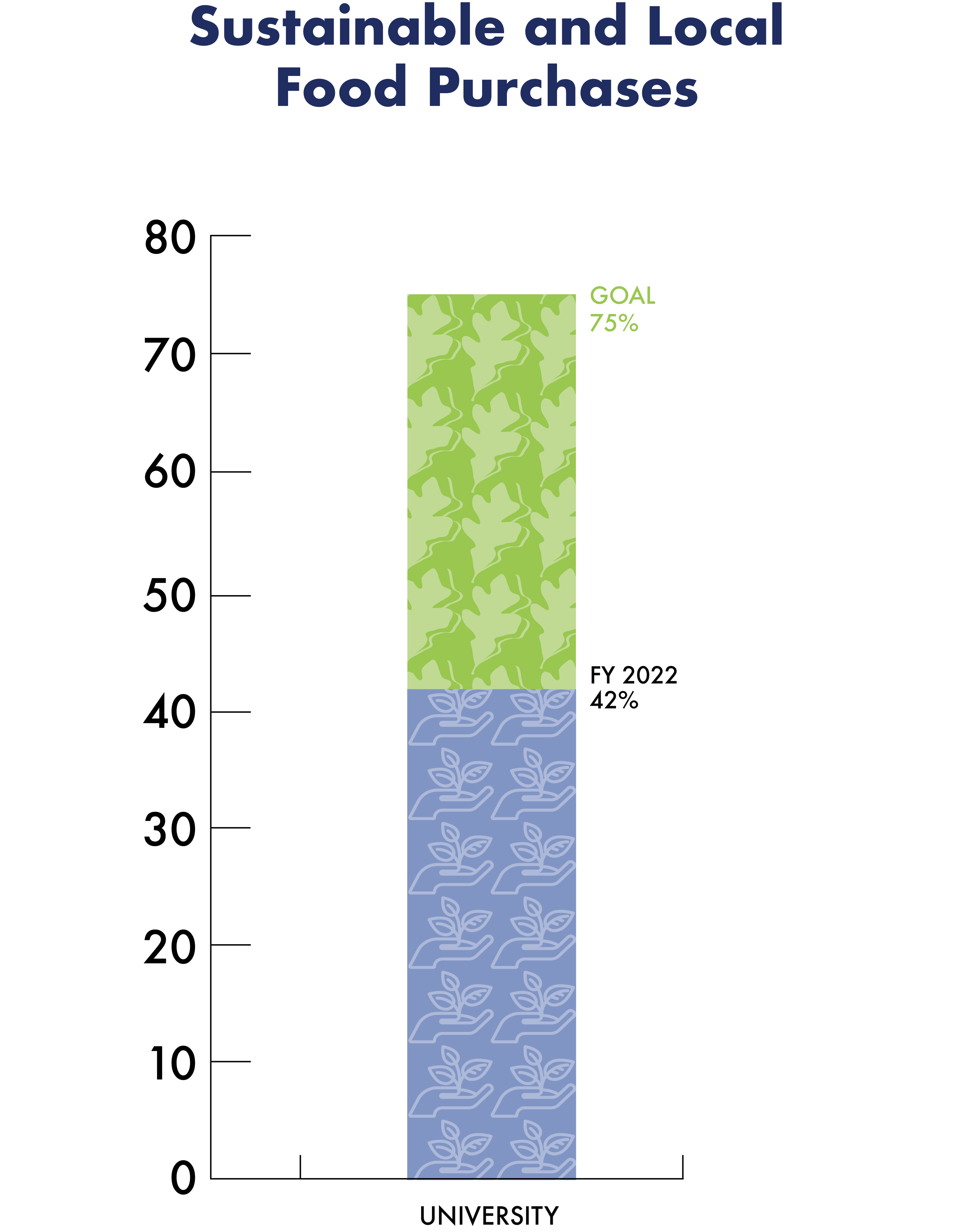
Emory’s goals are for 75% of the food purchased by the University and 25% of food purchased by Healthcare to be locally or sustainably grown by 2025. In 2019, Emory University’s Atlanta campus reached 36%, Oxford College reached 39%, and Emory Healthcare’s hospital average reached 13%. Each of Emory Healthcare’s hospitals that tracked sustainable and local food purchases report the following figures for 2019:
- 21% Emory University Hospital
- 17% Emory Johns Creek Hospital
- 12% Emory University Orthopaedic & Spine Hospital
- 7.5% Emory Wesley Woods Hospital
- 7% Emory University Hospital Midtown
- 5% Emory Saint Joseph’s Hospital
Today
42%
of food served in Emory University dining halls is sourced locally or sustainably
$804,477+
dollars from student meal plans spent at the Farmers Market since Fall 2015.
Tomorrow
Emory’s Sustainability Vision & Strategic Plan commits Emory to:
- Expand sustainable food purchases, including from the Oxford Organic Farm, in Emory Dining to 75 percent by 2025.
- Expand sustainable and local food purchases in catered events.
- Expand sustainable and local food purchases in Emory Healthcare to 25 percent and establish tracking system to document future gains.
Building a Sustainable Food Future at Emory
From dining halls, classrooms, and patient rooms, to hospital cafeterias and the Oxford College organic farm, Emory University and Emory Healthcare foster a healthy, local food system that is values-based, relationship-focused, and economically-regenerative. Emory faculty, staff, students, and patients are served nutritious and sustainably-sourced food that nourishes them, while also nourishing a Southeast regional agricultural economy. The Sustainable Food Committee supports transparency in sustainable and local food purchases and has created the weekly campus farmers market; educational garden project; and annual, student-led sustainable food fair. Innovative teaching across units and educational programming for the Atlanta community highlight ethical decisions for individuals as well as institutions. Through the work of the committee, Emory University and Emory Healthcare contribute to more just, seasonal, local, and nutritious food system for all.