
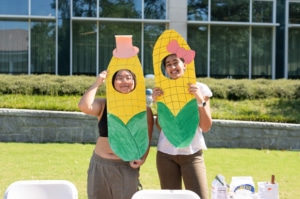
Emory’s Office of Sustainability Initiatives is celebrating 20 years of formal sustainability action at Emory. This September, an aspect of this work is being honored by the Association for the Advancement of Sustainability in Higher Education (AASHE), an international nonprofit membership organization that works to build sustainability on campuses. Emory’s Dining program was once again recognized as a Top Performer by the 2026 Sustainable Campus Index, marking the sixth consecutive year Emory has been named a top performer.
Everyone eats, and each meal marks a significant interaction with the world around us. Our food comes from somewhere, is grown by someone, is transported, processed, and prepared. The choices we make when we decide what’s for dinner can have impacts far beyond our own health and nourishment. For this reason, Emory has long prioritized locally-sourced, sustainably-produced food in its dining halls.
A variety of investments have helped Emory achieve the best-in-class performance target in the Sustainable Campus Index for food and dining, including:
- Establishing the Sustainable Food Committee in 2007, a group of committed students, staff and faculty who help Emory advance its sustainable food goals
- Creating the Emory Farmers Market, which operates weekly on Tuesdays from 11 a.m.-2 p.m. during the academic year
- Establishing the Oxford Organic Farm in 2014, which serves as a teaching lab and food production venue for the Oxford and Atlanta campus dining halls
- Committing to the purchase of produce from local and small-scale farmers in the metro Atlanta area, through a partnership with The Conservation Fund’s Farms Fund
The Sustainable Campus Index is a publication from AASHE that recognizes top-performing sustainable colleges and universities overall and in 17 impact areas, as measured through the Sustainability Tracking, Assessment and Rating System (STARS).
“Congratulations to Emory University on earning recognition as a Top Performer in the 2026 Sustainable Campus Index,” said AASHE Executive Director Meghan Fay Zahniser. “Achieving this distinction reflects years of commitment, collaboration, and sustained progress across the institution. Top-performing colleges and universities like Emory demonstrate what is possible when sustainability is embedded into institutional priorities and translated into measurable action, helping raise the bar for higher education as a whole.”
Sustainable dining options at Emory
Emory earned its Food and Dining top performer status by establishing clear Sustainability Guidelines for Food Purchasing and building strong relationships between culinary staff and local producers. Currently, approximately 25% of Emory’s total annual food and beverage expenditures are spent on products that are sustainably or ethically produced. Meanwhile, 46% of total annual food and beverage expenditures are on plant-based foods.
Online menus allow diners to view vegan, vegetarian and local options available every day at each dining location. A vegan Stem-to-Root Station is front and center when entering the main residential dining hall, the Dobbs Common Table (DCT). Options include tofu, tempeh, seitan, a variety of beans and legumes, and whole grains such as quinoa. Other Emory Dining cafes offer vegan options, including house-made bean burgers, hummus vegetable wraps, scrambled tofu, and build-your-own pasta or stir-fry stations with vegan sauces and tofu.
In Emory hospitals, vegan meals are available for patients and vegan entrees and sides are designated with a special symbol on the posted à la carte menus in retail food service areas.
In addition to the dining locations, Emory’s Farmers Market, named one of the 7 Best Farmers Markets in Atlanta, offers alternative, sustainable food sources to the community. There, students can use their Emory Card and meal plans, just like at any of the on-campus dining halls. Since fall 2015, students have spent more than $800,000 from their meal plans at the market, demonstrating the community’s love of fresh, local food.
Extending efforts beyond campus
Emory’s sustainable food commitment also addresses food waste.
Starting in 2021, Emory Dining partnered with student-run organization Slow Food Emory to pack leftover food from DCT once a week and distribute it at Emory’s Woodruff Library to people in need.
Meanwhile, Emory Dining manages a Community Fridge and Pantry with excess food from Bon Appétit’s “to go” program. The fridge is located on the first floor of the Alumni Memorial University Center (AMUC) and is available to anyone on campus.
The hospital cafés make weekly prepared food donations to Second Helpings Atlanta, a nonprofit food rescue organization whose mission is to reduce hunger and food waste in the metro Atlanta area by rescuing surplus food and distributing it to those in need. Emory also developed a Food Security Resource Guide to aid members of the Emory community facing food insecurity.
Beyond combating food waste, Emory elevates sustainable food production, too. Second Nature, a national nonprofit, recognized Emory for its partnership with the Farms Fund and its efforts to address climate resilience through local, sustainable food sourcing. The Farms Fund matches farmers with land they lease to own and supports them as they grow their businesses. Emory is committed to entering food purchasing agreements with Farms Fund farmers, which supports the farms’ financial stability. This, in turn, can strengthen local food systems, reduce emissions and promote equitable economic growth.
The environmental impacts of food go beyond what ends up on our plates — food packaging and service ware are often comprised of single-use plastics. Emory is taking steps to reduce the purchase and use of these plastics in accordance with the Break Free from Plastic Pledge signed by the university. In 2024, in response to student leadership, the single-use compostable food containers at DCT were replaced by reusable stainless-steel containers from USEFULL.
Get Involved!
Do you want to help support Emory’s sustainable food and dining initiative or another aspect of the campus’ sustainability work? The Office of Sustainability Initiatives is accepting applications for its annual Incentives Fund through Friday, October 2, 2026. The Incentives Fund program provides grants of up to $3,000 for general sustainability projects and up to $5,000 for certified Green Offices and Labs. Consider applying to help Emory continue to score highly and achieve its sustainability goals!